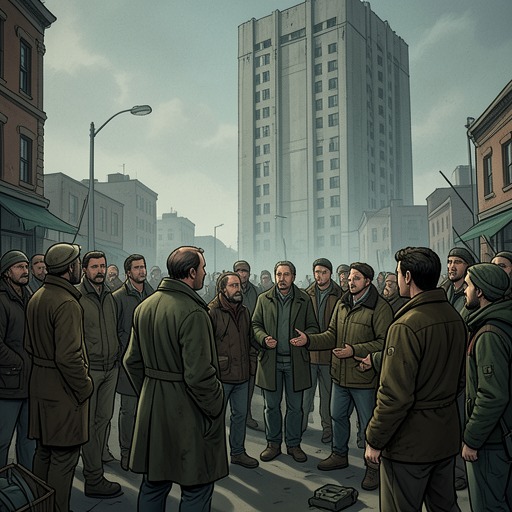
“A man can safely count but on himself”
William Tell“A man can safely count but on himself” is Wilhelm Tell’s blunt answer to Werner Stauffacher’s appeal for solidarity. The line gives memorable form to a conflict running through the play: whether safety and freedom depend chiefly on individual self-reliance or on people acting together. Later debates about the Swiss cantons’ obligations to the empire and their resistance to tyranny complicate, rather than simply confirm, Tell’s stark claim.
The Exchange Between Tell and Stauffacher
When Stauffacher says that much could be done if they stood fast together, Tell describes the person who seeks no one’s safety but his own. Stauffacher then challenges him for deserting the common cause; Tell replies, “A man can safely count but on himself!” Stauffacher counters that even the weak grow strong through union. The expression is therefore not an isolated maxim: it is the sharpest turn in a brief disagreement over whether collective action is trustworthy or necessary.
Self-Reliance and Political Obligation
The play places Tell’s distrust beside a more complex account of political freedom. Stauffacher and Rosselmann recall that the cantons freely sought the empire’s protection, and that this arrangement was recorded in Emperor Frederick’s charter. Stauffacher also observes that even the freest people have a feudal lord and a supreme judge to whom disputes may be appealed. In this account, freedom does not mean the absence of every obligation: the freemen are engaged to aid the empire with their swords in war and to guard the power that guards them. The expression’s absolute emphasis on relying on oneself thus sits beside a political order built on reciprocal protection and duty.
From Maxim to Collective Resistance
As the conflict develops, the resistance is framed as a shared effort to recover rights and reject domination. Walter Furst calls for a plan to throw off a hated thraldom and keep ancient rights inviolate; he says the rebels will do what necessity requires, but nothing further, and will drive out the tyrants and their agents. Later, the assembled crowd falls upon a building, and Furst declares that the floodgate has burst and they cannot be restrained. These actions do not erase Tell’s insistence on personal reliance. They expose the tension inside the expression: a person may trust chiefly in himself, yet the struggle for common rights proceeds through a union strong enough to act together.